
Decision question
Could the existing works be optimised to meet future treatment requirements without the full £6.76m capital intervention?

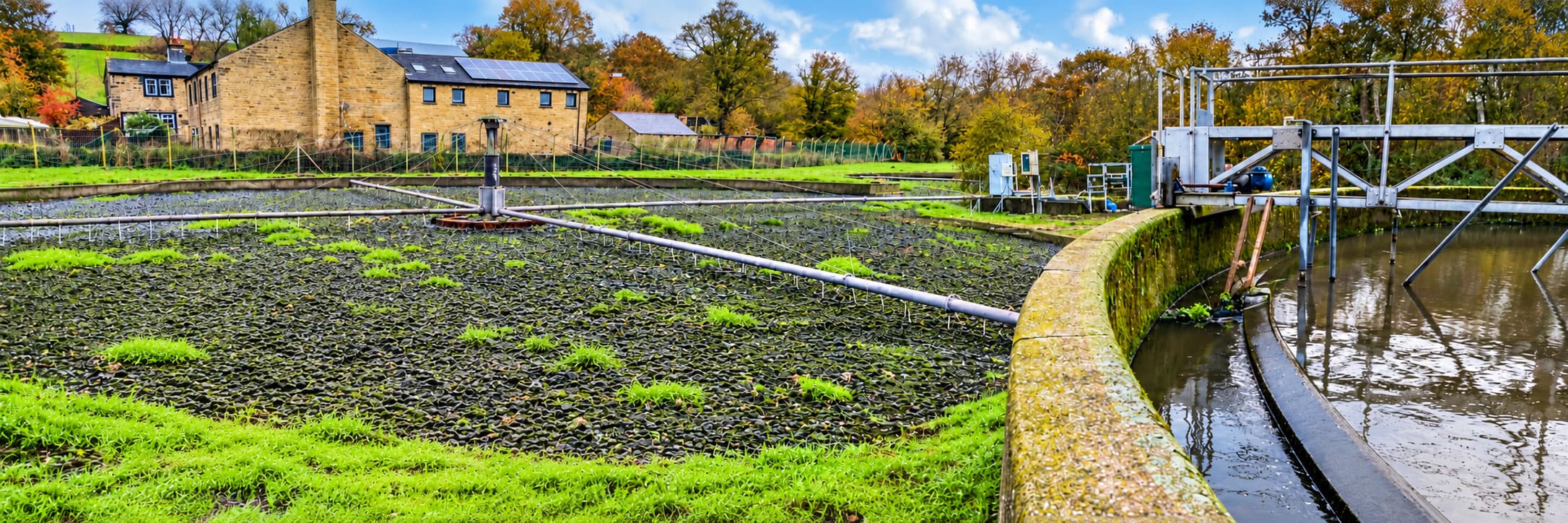
A two-week digital monitoring and sampling programme showed where the biological filter works was underperforming and where process headroom remained. The project team used the evidence to target operational and maintenance interventions and reduce the promoted capital solution from £6.76m to an estimated £1.6m.
Could the existing works be optimised to meet future treatment requirements without the full £6.76m capital intervention?
Biological filter works, approx. 40,000 pe
Primary settlement, mineral and plastic media filters, humus settlement
Process investigation and capital optioneering
Two optimisers around primary settlement plus targeted site sampling
Two optimisers aligned PST inlet and outlet data with targeted sampling across the works.
*PST inlet
**PST outlet targeted spot samples across filters + final effluent
Sustaining a 0.6 mg/L TP target despite concerns over BOD, solids and ammonium performance
The team could not identify which assets were underperforming or how much process headroom remained
The decision required evidence on whether targeted improvements could avoid the proposed £6.76m tertiary-treatment scheme
Two optimisers, live dashboards and targeted site sampling identified process constraints and remaining headroom
Two optimisers at the PST inlet and outlet, supported by an on-site laboratory
COD, ammonium, turbidity and temperature at one-minute intervals
Flow and asset-capacity data through bespoke dashboards and process models
Live review, targeted sampling and daily adaptation during the two-week survey
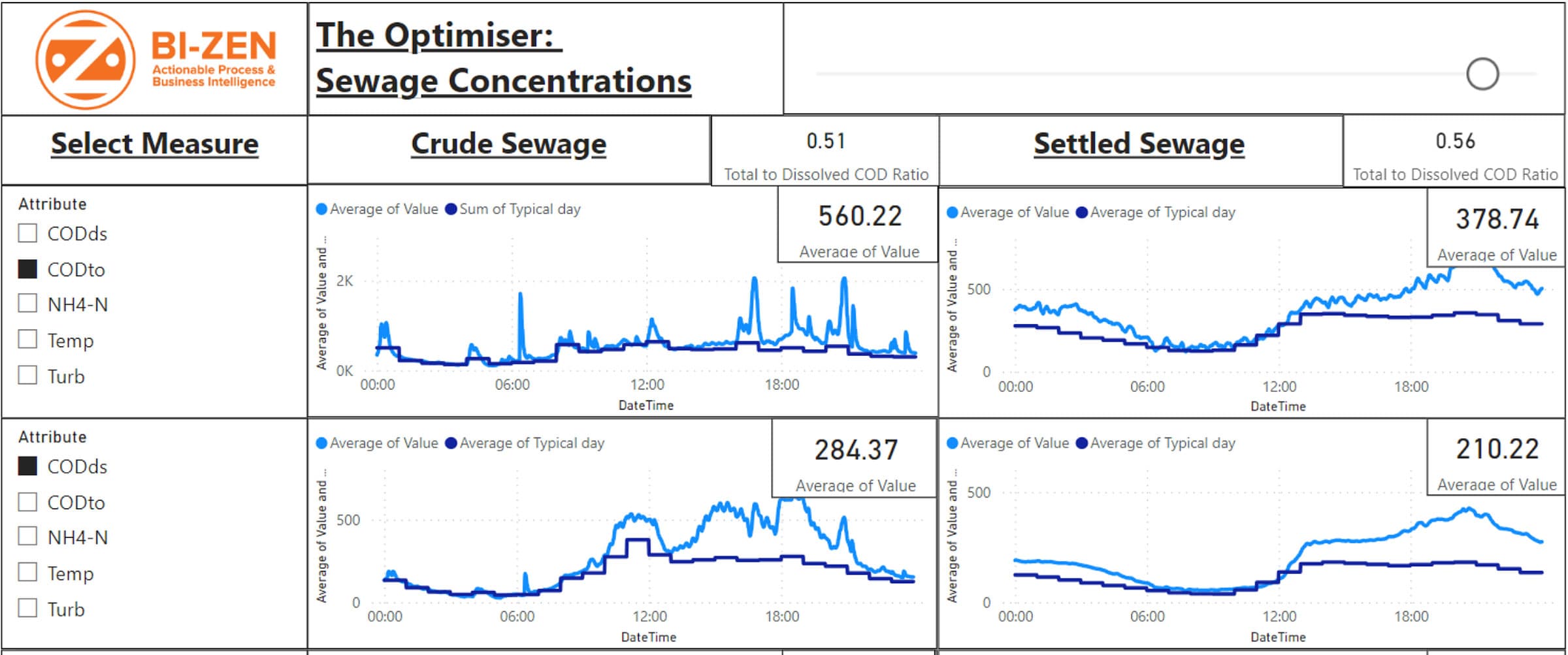
Time-aligned inlet and settled-sewage data exposed the daily load pattern, including FFT operation and a recurring morning ammonium peak. Bi-zen’s granular datasets enabled stantec to apply the pearce williams and pearce edwards models to the mineral and plastic filters respectively. Comparing modelled capacity with actual performance for each filter helped distinguish maintenance constraints from capacity limits and target maintenance within the capital scheme.
The project team used the evidence to focus the solution on caustic dosing, flow-split optimisation and targeted maintenance. The promoted intervention reduced from £6.76m to an estimated £1.6m, reducing the estimated capital requirement by approximately £5.1m.