
Decision question
How much nitrification headroom could the existing filters provide, and could a simple hydraulic change reduce the need for major capital work?

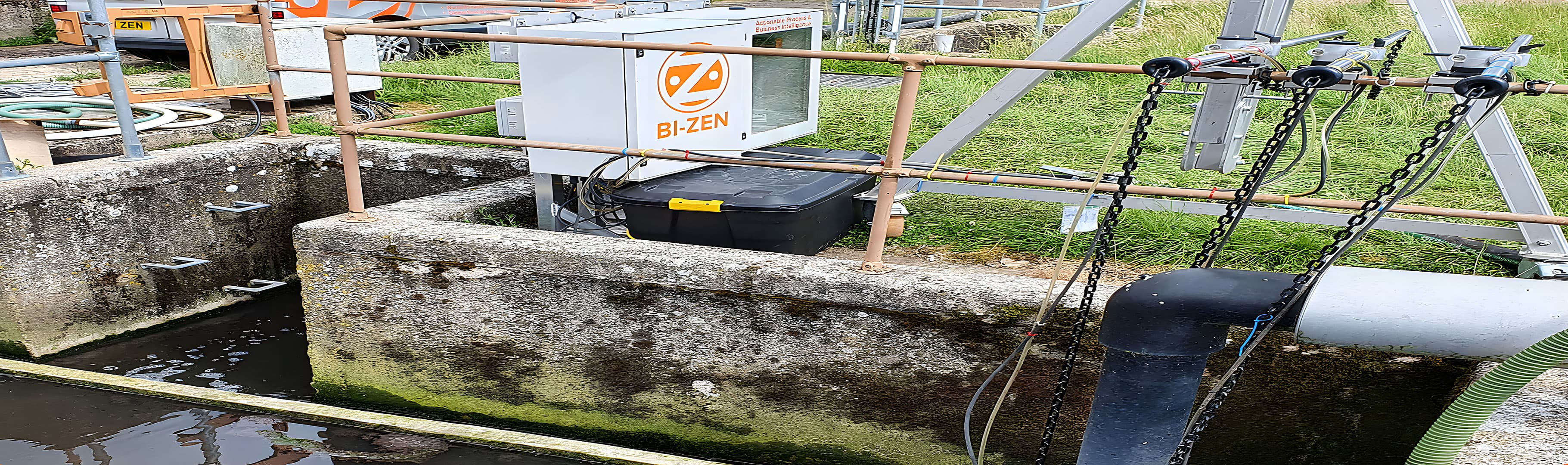
At a 2,826 PE biological filter works, BI-Zen monitored a controlled increase in recirculation and filter wetting using one-minute data at the humus-tank outlet. Live evidence exposed short morning ammonia peaks that periodic samples could miss and helped the project team test hydraulic options before assuming that a major media upgrade was required.
How much nitrification headroom could the existing filters provide, and could a simple hydraulic change reduce the need for major capital work?
2,826 PE biological filter works serving a growing catchment
Historical samples indicated borderline ammonia treatment
Temporary increase in recirculation to raise filter wetting during summer low flow
One-minute NH4-N, NO3-N, turbidity, ph and temperature at the humus-tank outlet
The recirculation trial changed filter wetting while the optimiser tracked the combined biological response at the humus-tank outlet.
1 increased filter wetting via recirculation
2 monitored response at humus-tank outletTest installed process headroom before defining the capital solution
Reveal short ammonia peaks and the response to recirculation that periodic samples could miss
Avoid over-specifying a media upgrade if the main constraint was hydraulic or limited to short daily peaks
One-minute monitoring separated short peak events from continuous loss of nitrification
Temporary optimiser at the humus-tank outlet
NH4-N, NO3-N, turbidity, ph and temperature at one-minute intervals
Flow, current FFT and asset-capacity information aligned in a live dashboard
Multi-week monitoring and wastewater process interpretation
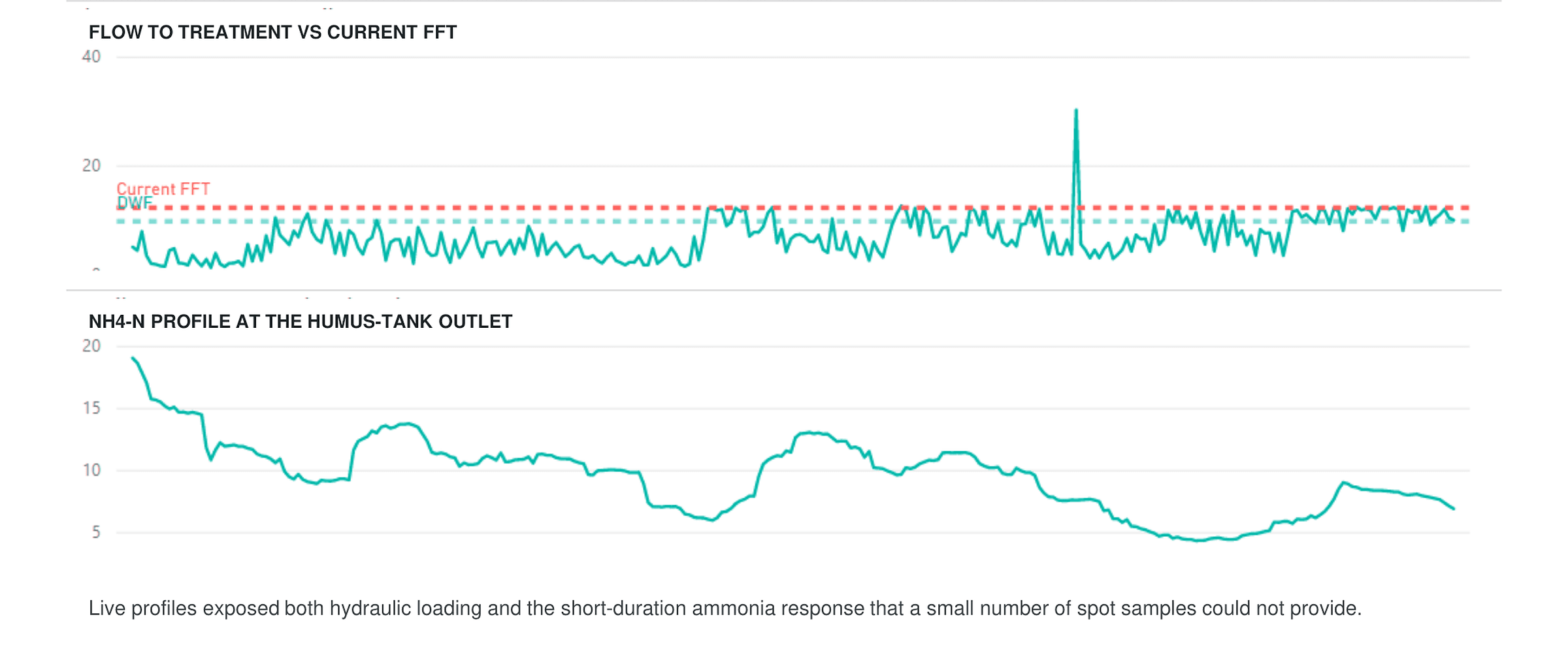
The works operated near its current FFT and showed a repeatable morning ammonia peak. Risk was concentrated into short periods rather than persisting all day. This directed attention towards peak-load control, hydraulic management and filter wetting instead of assuming that the filters lacked capacity at all times.
The team gained a stronger basis for targeting hydraulic changes and testing recoverable nitrification headroom before major upgrades. Recirculation was treated as a site-specific lever, not a universal answer. On split processes, parallel optimisers at individual humus-tank outlets could extend the approach by comparing units and targeting maintenance.