
Decision question
What was driving the pollution failures, and which operational, maintenance or control changes would restore stable treatment?
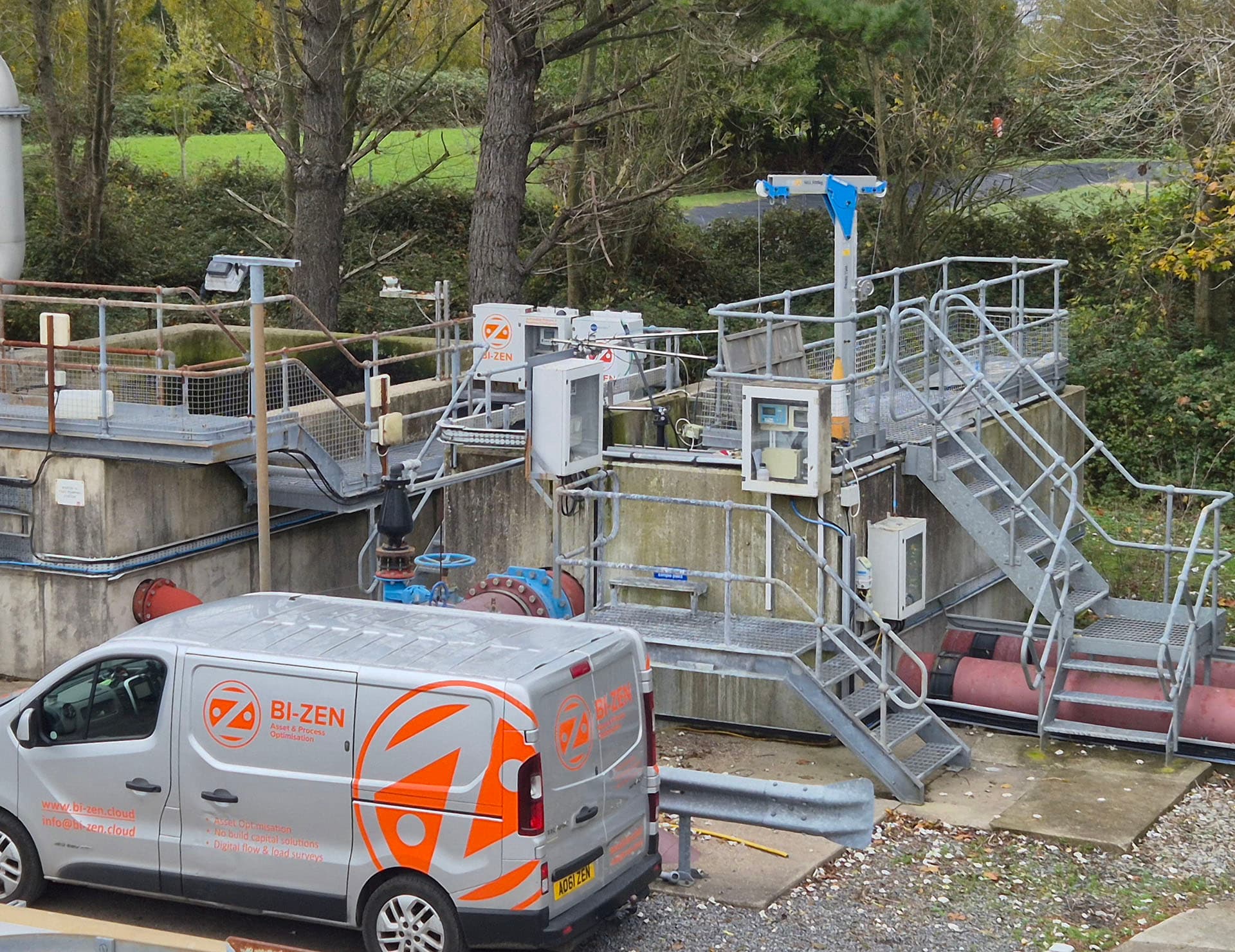
A medium to large wastewater treatment works, that included region sludge treatment, had experienced pollution failures and required sustained reactive intervention. BI-Zen helped operations, process science and ICA use a systems-thinking approach to test historic assumptions and close evidence gaps with live Optimiser data.
The collaborative work identified the conditions behind instability, supported rapid operational and control changes, and helped recover more stable performance without a major capital intervention.
What was driving the pollution failures, and which operational, maintenance or control changes would restore stable treatment?
Pollution failures, unstable total-nitrogen performance and sustained reactive intervention
Sludge imports and return liquors interacted with primary settlement, baffs and denitrification
Periodic samples and existing signals could not reliably capture short events or explain their causes
Operations, process science, ICA and bi-zen worked from one shared evidence base
The review followed changing loads and process response from sludge handling and primary treatment through carbon removal, nitrification, denitrification and final effluent.
BLUE whole-works load, asset and operational review
GREEN targeted high-frequency monitoring locations
Restore stable treatment by understanding causation rather than repeatedly responding to symptoms
Capture intermittent backwash, return-liquor and oxygen carry-over effects that periodic data could miss
Give the wider team evidence it could review, share and use to implement changes quickly
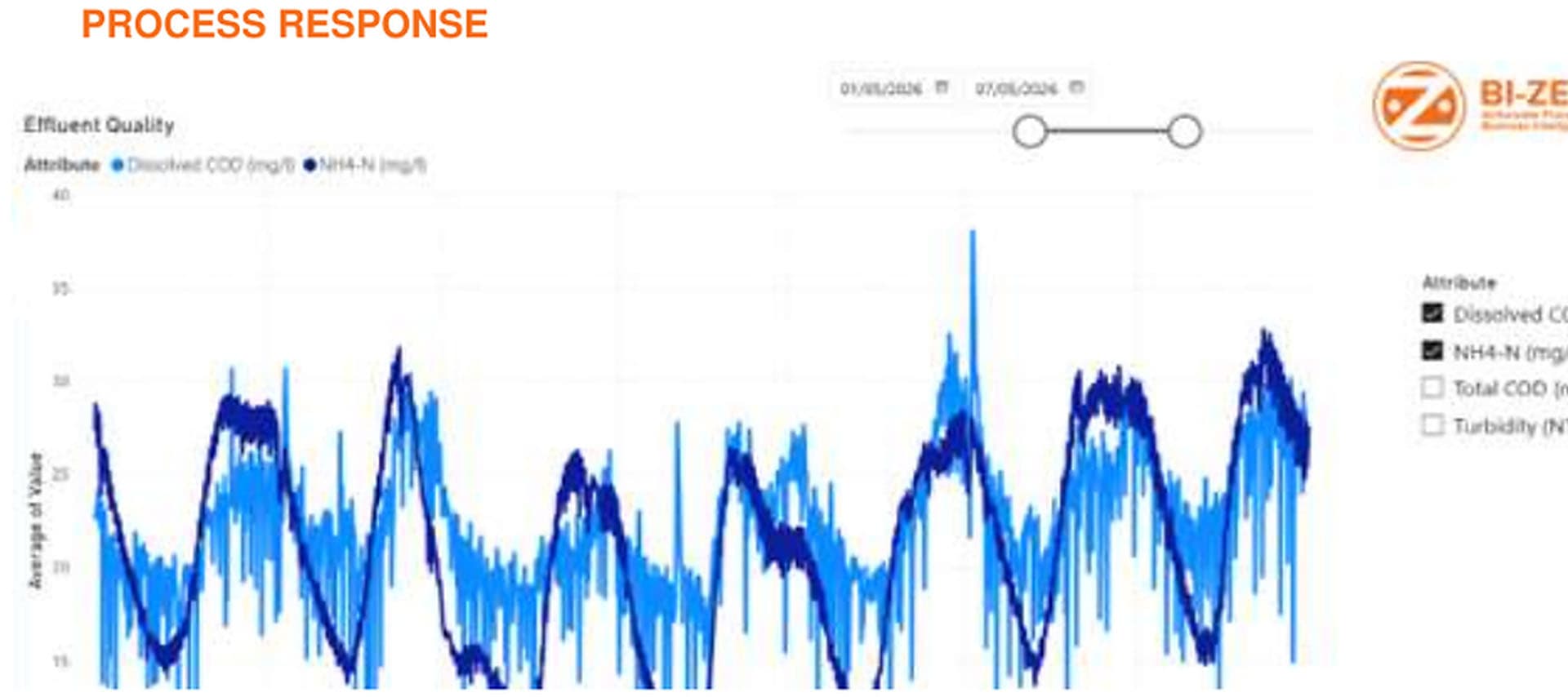
High-frequency monitoring helped operations, process science and ICA implement changes and verify commissioning
Whole-works review of loads, sludge inventories, return liquors and asset availability
Temporary optimisers targeted at unresolved process interactions and short-duration events
High-frequency trends, site data and decision tools brought together in accessible live evidence
Live checks supported ICA changes and rapid commissioning before permanent sensors were available
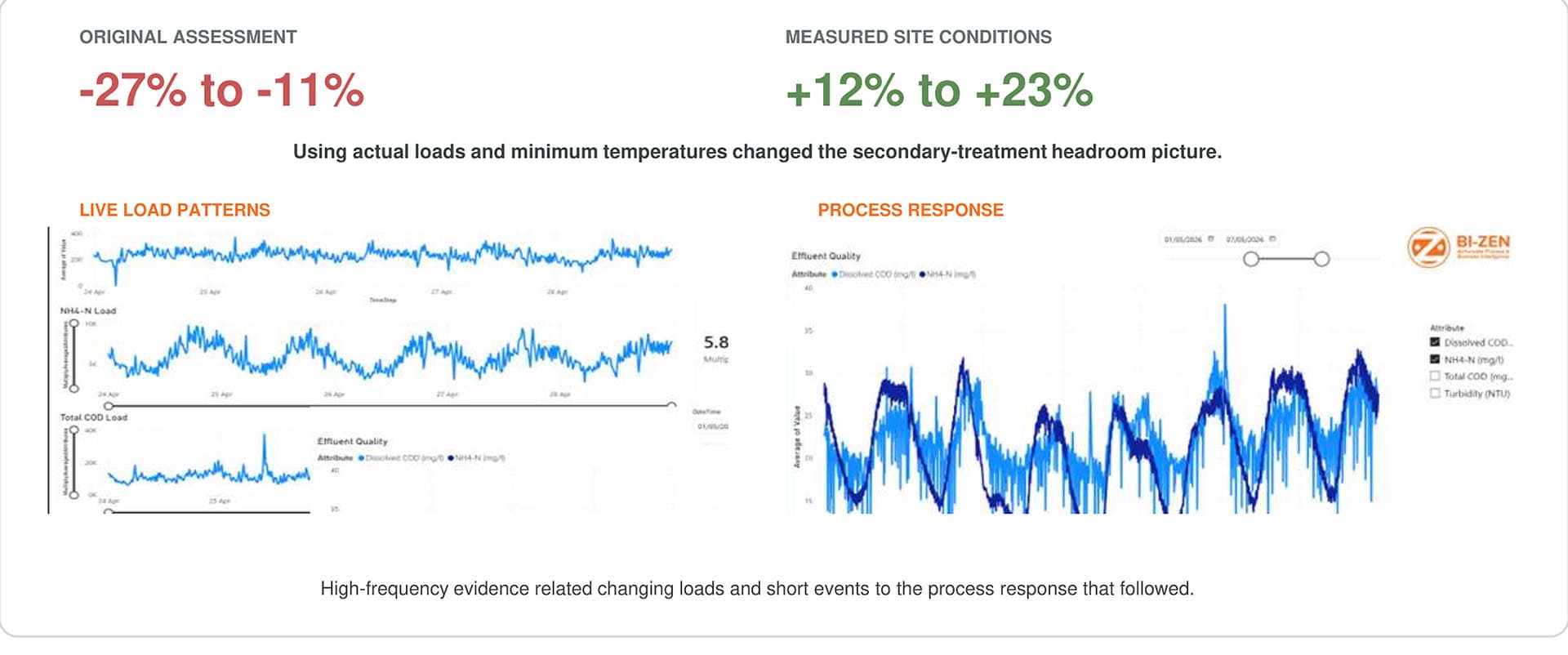
Instability was not explained by one simple capacity constraint.
Return-liquor timing, asset availability, baff backwash breakthrough, dissolved-oxygen carry-over and sensor reliability all influenced performance.
Time-aligned monitoring captured events that periodic data could miss and made the evidence easier for the wider team to review and share.
Collaborative operational, maintenance and control changes helped recover more stable performance without a major capital intervention.
Live optimiser data allowed ica engineers and the wider team to test changes and confirm commissioning while permanent sensors were repaired or replaced, retaining momentum and creating a stronger basis for future control optimisation.