
Decision question
How could the team control soluble phosphorus tightly enough to meet the operating target without undermining nitrification or increasing metals risk?

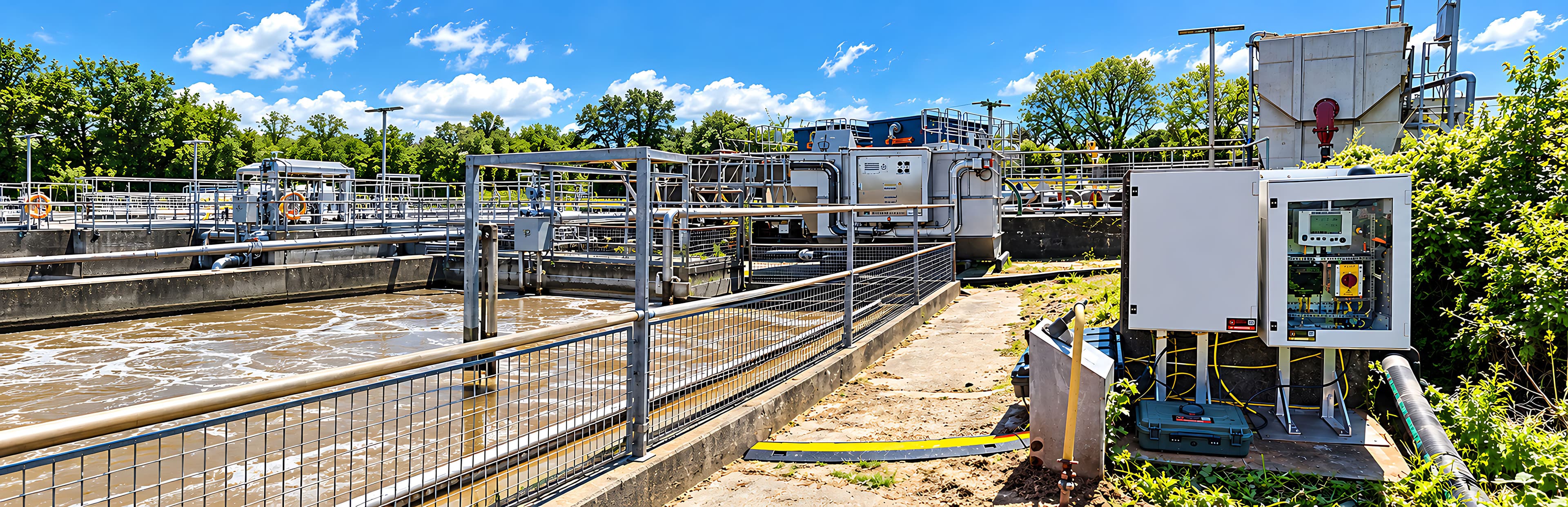
At a 10,000 PE works, upgraded solids separation was producing very low final-effluent turbidity, but the remaining phosphorus was predominantly soluble. With permanent analysers on long lead times, BI-Zen rapidly deployed temporary Optimisers and specialist nutrient monitoring. Two-minute data and live dashboards gave the commissioning team a faster way to review chemical dosing, verify process response and watch for conditions that could affect nitrification.
How could the team control soluble phosphorus tightly enough to meet the operating target without undermining nitrification or increasing metals risk?
10,000 PE works with new storm storage, three-point PAC dosing and interstage solids removal
Very low final-effluent turbidity showed that solids capture was performing strongly
0.3 mg/L annual-average TP permit with an operating target below 0.2 mg/L
Mobile optimiser coverage adapted across settled sewage, interstage outlet and final effluent
The monitoring moved as the question developed, first validating solids removal and then profiling the soluble phosphorus load before dosing.
Temporary monitoring at the upstream load, interstage performance point and final effluent
Provide usable commissioning evidence before permanent online analysers became available
Separate soluble-phosphorus control from solids-removal performance under variable catchment loading
Avoid excessive PAC dosing that could reduce ph and alkalinity, inhibit nitrification or increase metals risk
Live evidence focused commissioning on soluble-phosphorus control and biological protection
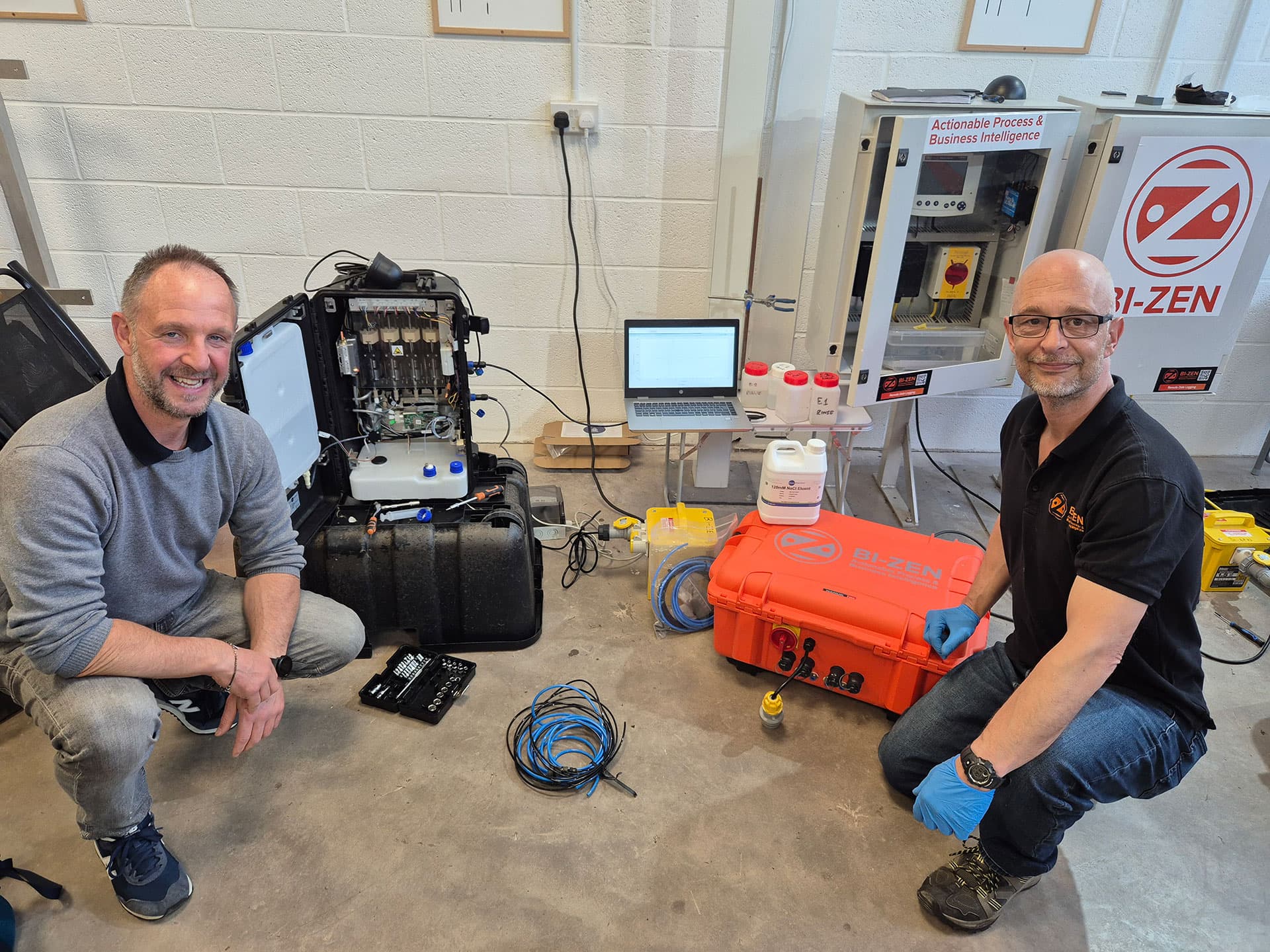
Temporary optimisers and specialist nutrient analysers
Two-minute ortho-p, turbidity, ph, nitrate, nitrite and DO data
Relevant flow, spot-sample and online signals combined in a live dashboard
Field validation, sensor QA and redeployment as the question changed
Live turbidity comparison supported validation of solids separation before the optimiser moved upstream.
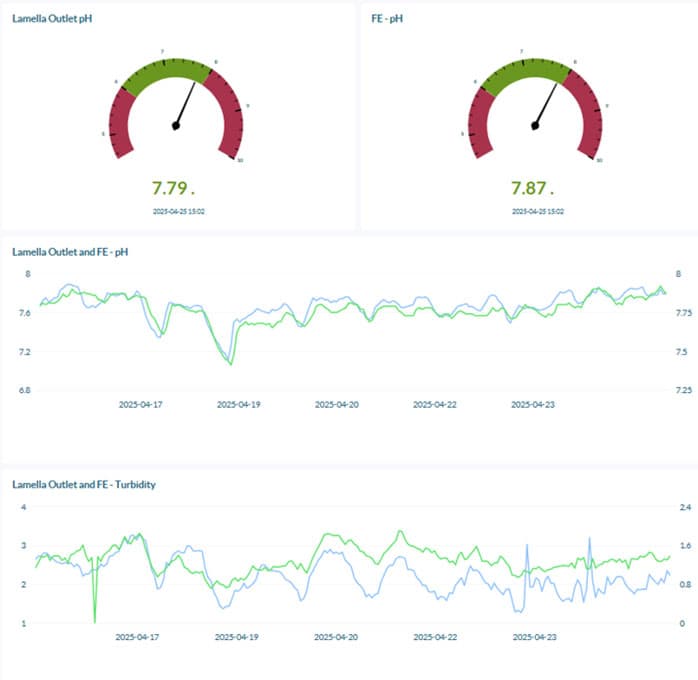
After redeployment, average turbidity reduced from 107.7 NTU in settled sewage to 1.61 NTU at final effluent. This confirmed strong solids capture and shifted attention toward soluble ortho-p. Parallel checks exposed inconsistent permanent signals, while a joint investigation traced unstable ortho-p readings to high-do microbubbles and improved the sampling arrangement.
The commissioning team gained a faster feedback loop for reviewing PAC dose and biological response while the work remained live. Monitoring locations and instrumentation could be adapted around the next question, reducing reliance on retrospective samples while permanent analysers remained unavailable.