
Decision question
What were the actual hydraulic and pollutant loading profiles at each works, and how should they inform rationalisation and future design?
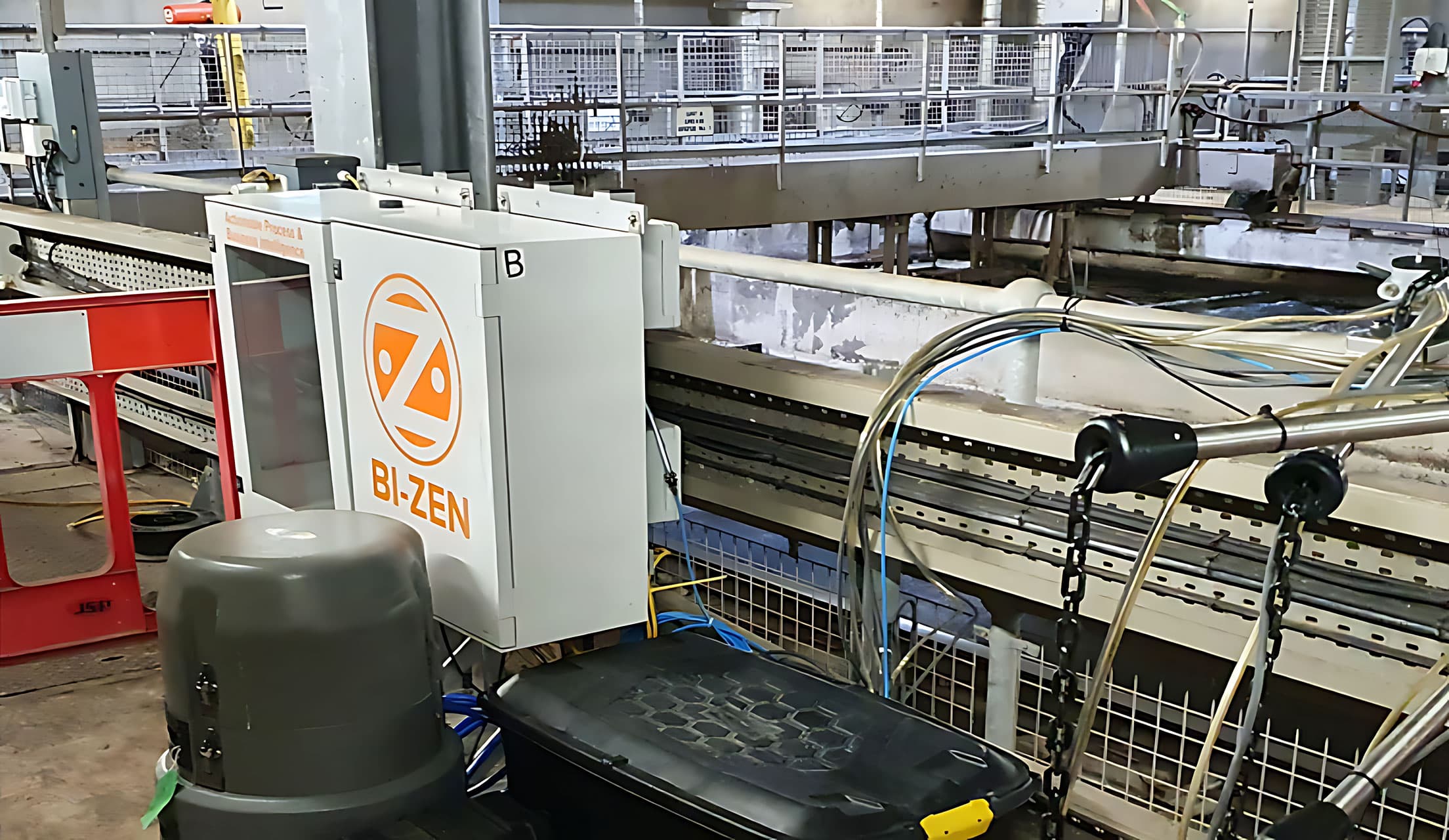
BI-Zen deployed temporary Optimisers at the inlets to two large works within one catchment. High-frequency evidence established current loading profiles, quantified saline infiltration and tested the effect of digestate return liquors. At one works, the measured basis indicated a potential reduction of around 20% against historical values, allowing design assumptions to be reviewed before the rationalisation option progressed.
What were the actual hydraulic and pollutant loading profiles at each works, and how should they inform rationalisation and future design?
Two large works with historical PE values of 183,000 and 130,650
One partly underground inlet with poor rag capture and potential H₂S exposure
Catchment rationalisation and design-basis review
Temporary optimisers at the inlet to both works
Comparable inlet profiles separated the effects of pumped inflows, salinity and return liquors across the two works.
*works 1 inlet monitoring
**works 2 inlet monitoring
Test the historical loading basis before selecting a rationalisation or transfer solution
Historic records and conventional samples could not resolve diurnal load, first flush or catchment-specific influences
A poorly resolved design basis could increase transfer and treatment requirements, capital cost and operational risk
Parallel inlet monitoring replaced historical assumptions with current, site-specific load profiles
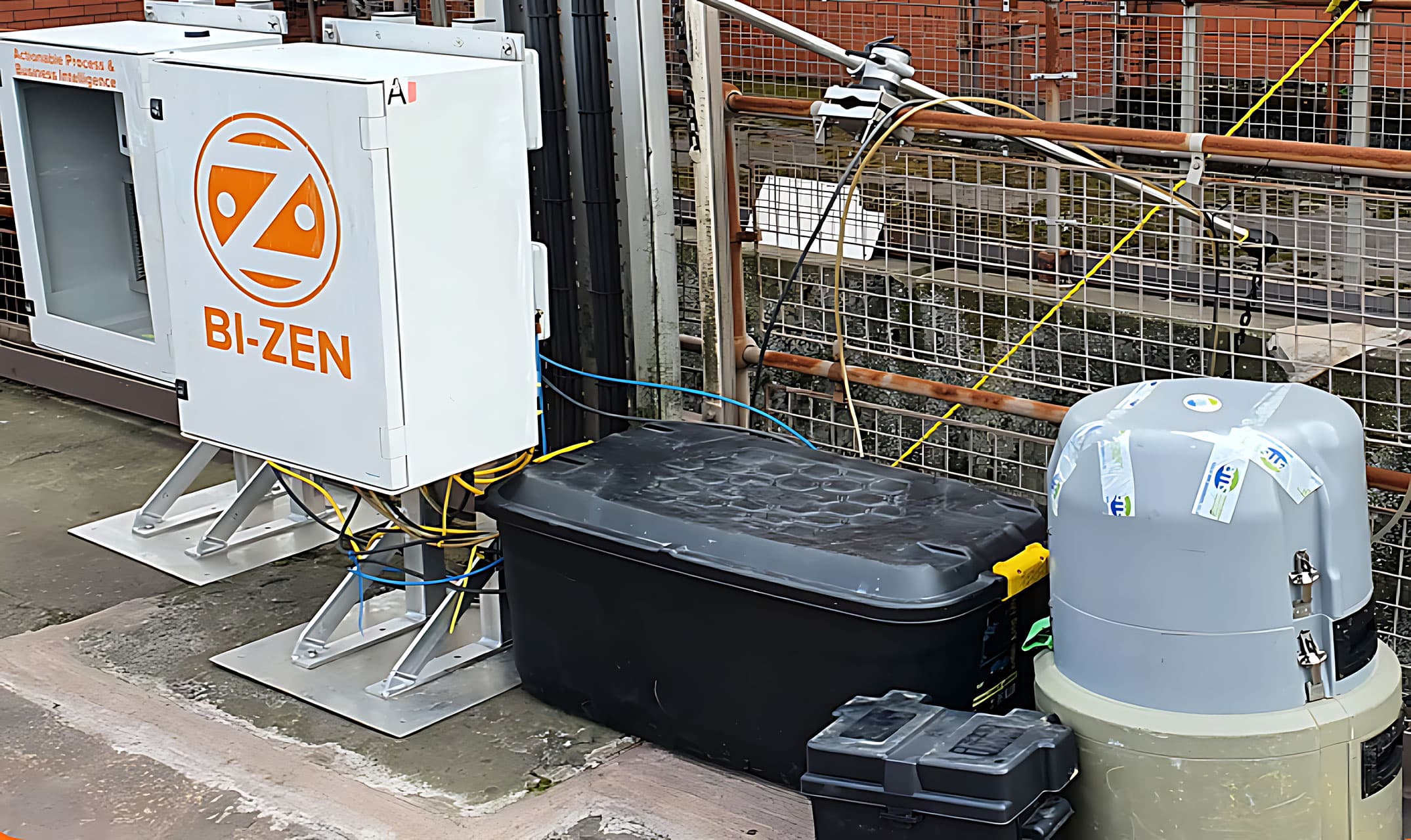
Temporary optimisers at the inlet to both works
COD, ammonia, turbidity, conductivity and supporting parameters
Flow, pumping patterns, return liquors and historical loading records
Rams-led deployment, remote review, sensor QA and live dashboards
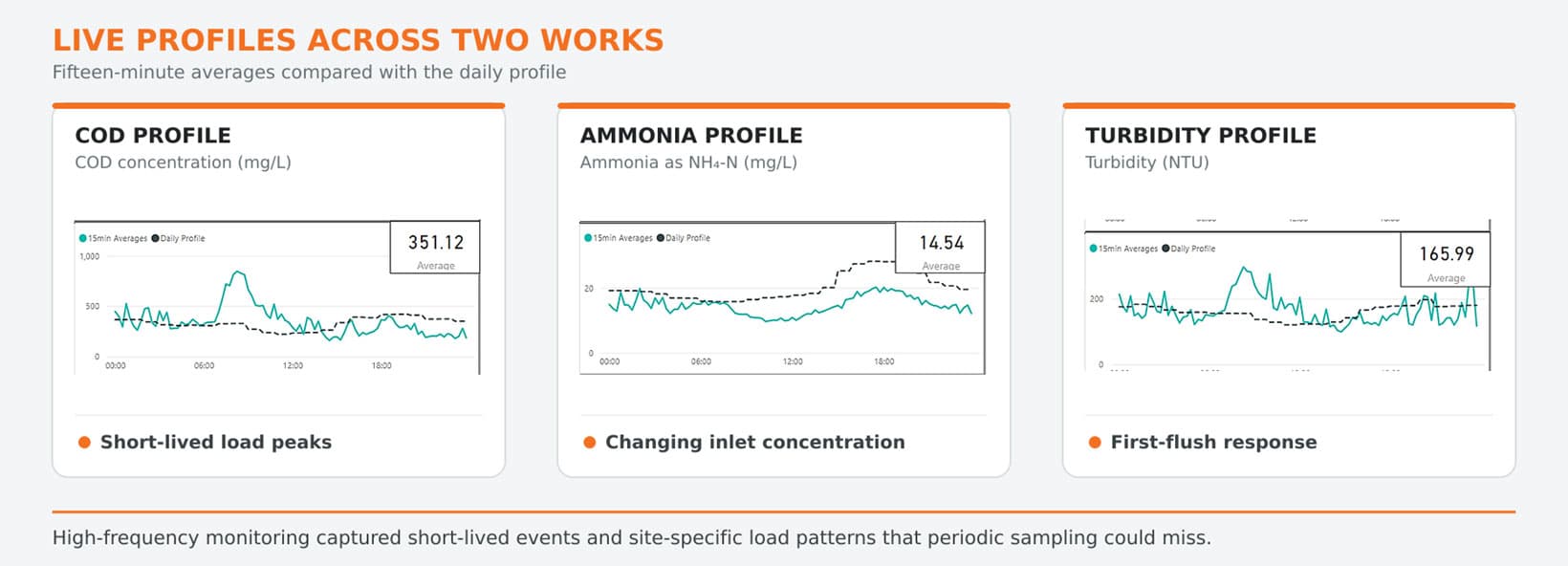
The live profiles captured first-flush conditions, wide diurnal variation and differences between pumped inflows.
Conductivity trends quantified saline infiltration at one works. Ammonia data tested the contribution of digestate return liquors at the other. The measured basis indicated a potential reduction of around 20% against historical values.
The client gained a more defensible basis for comparing the two works and assessing the rationalisation option. The evidence showed where transfer and treatment assumptions could be refined before design, while retaining the safety and operating constraints identified during deployment.