
Decision question
Can high-frequency evidence show when a carbonaceous ASP begins to nitrify, explain the conditions associated with N₂O and support a repeatable operational response?

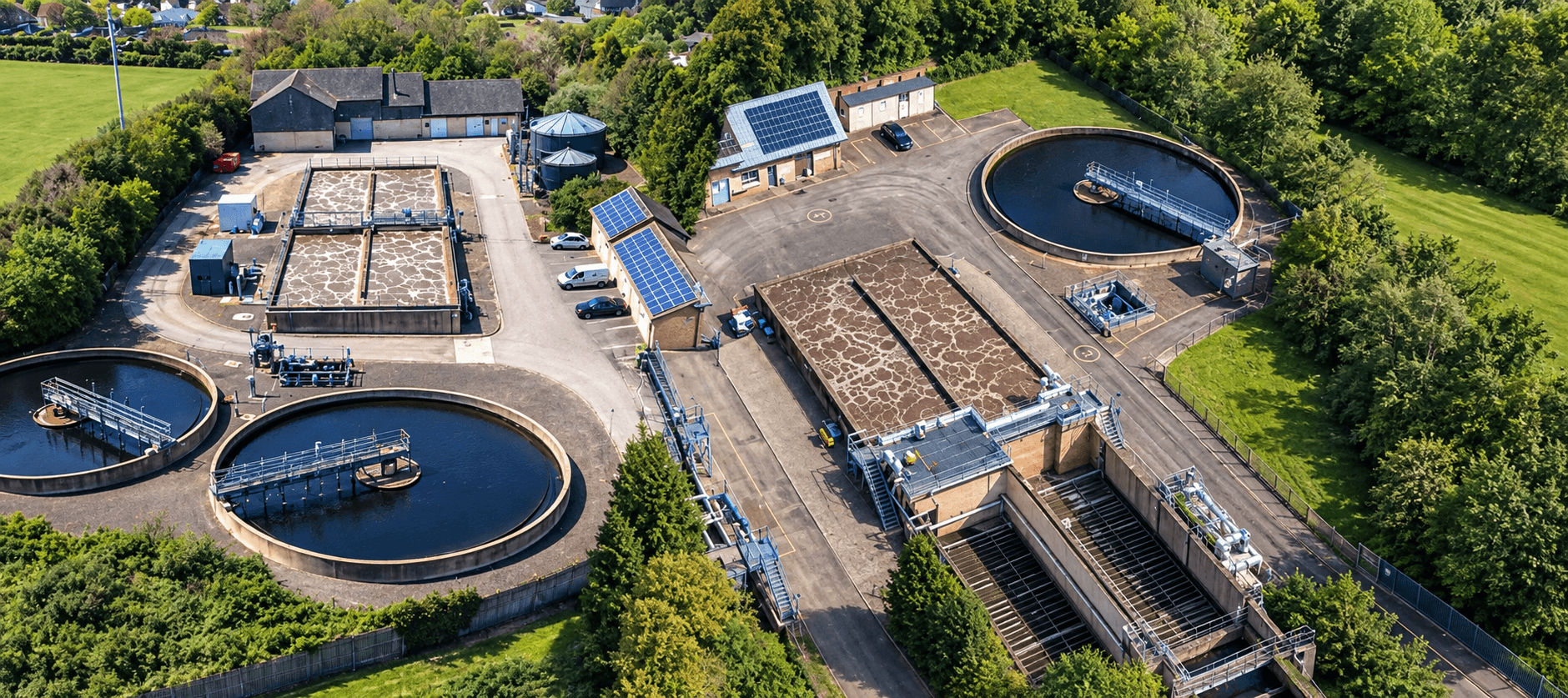
N₂O has 273 times the 100-year warming impact of CO₂, and recent UK water-sector reporting changes have raised the importance of understanding when wastewater processes generate it.
Across two comparable carbonaceous asps, bi-zen’s optimisers have connected changing load, aeration and treatment response with dissolved n₂o to reveal when unintended nitrification developed and inform an approach that could scale across a wider asset portfolio.
Can high-frequency evidence show when a carbonaceous ASP begins to nitrify, explain the conditions associated with N₂O and support a repeatable operational response?
Designed for carbon removal without an ammonia permit or the aeration duty needed for stable nitrification. Continued nitrification can show that the process has moved away from its intended operating state.
Derived PE changed by approximately 40% between the monitored periods. The lower loading altered the biological operating environment and the likelihood of nitrification.
Dissolved N₂O can develop during nitrogen process transitions. Monitoring it alongside nitrogen species, DO, COD, flow and temperature helped expose the conditions around each response.
Operations needed timely evidence for aeration volume, lane availability and control decisions. The approach also had to support comparison across similar assets.
One timeline connected inlet load, ASP conditions, nitrogen conversion, dissolved N₂O and final-effluent quality. This allowed the team to investigate causation rather than review emissions as an isolated signal.
*process and operating conditions
**high-frequency wastewater and dissolved N₂O evidence
Find where changing load and aeration move a carbonaceous process towards unintended nitrification
N₂O readings alone could not explain causation. The programme needed aligned load, process, energy and effluent evidence
A repeatable method could help prioritise operational trials across the client’s wider carbonaceous ASP portfolio
A 12-month programme combines fixed N₂O monitoring with mobile process intelligence and operational trials
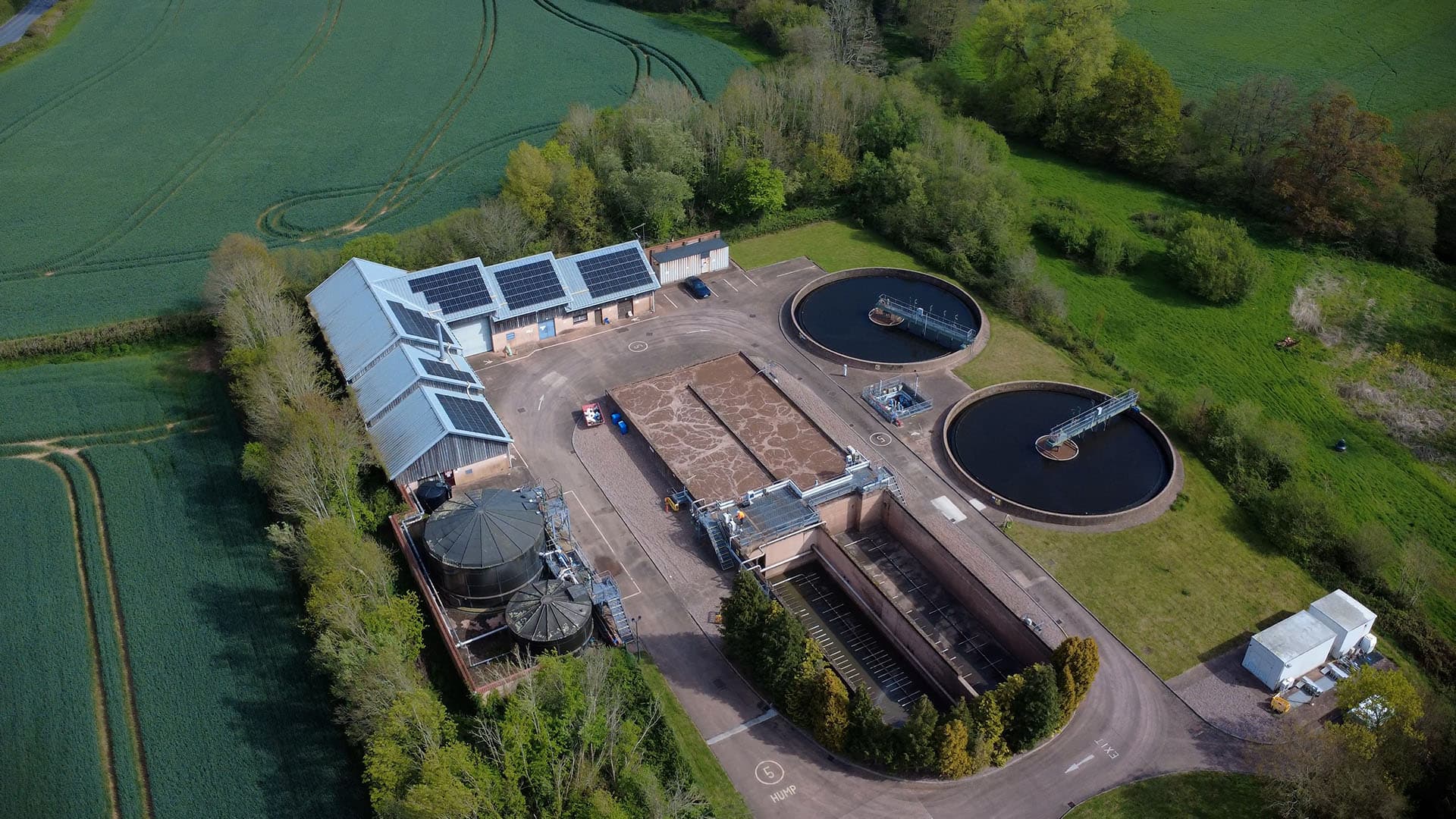
Fixed dissolved N₂O sensors across a 12-month programme, supported by mobile optimisers at two comparable carbonaceous asps
Inlet NH₄-N and COD; ASP DO, redox and N₂O; nitrogen species, final-effluent COD and UVT; turbidity and conductivity
Flow, blower duty, aeration response, lane availability and derived PE were time-aligned so load, process behaviour, energy and emissions could be reviewed together
Live dashboards and quality-controlled datasets supported regular operational discussions, allowing monitoring and trials to adapt as the evidence developed
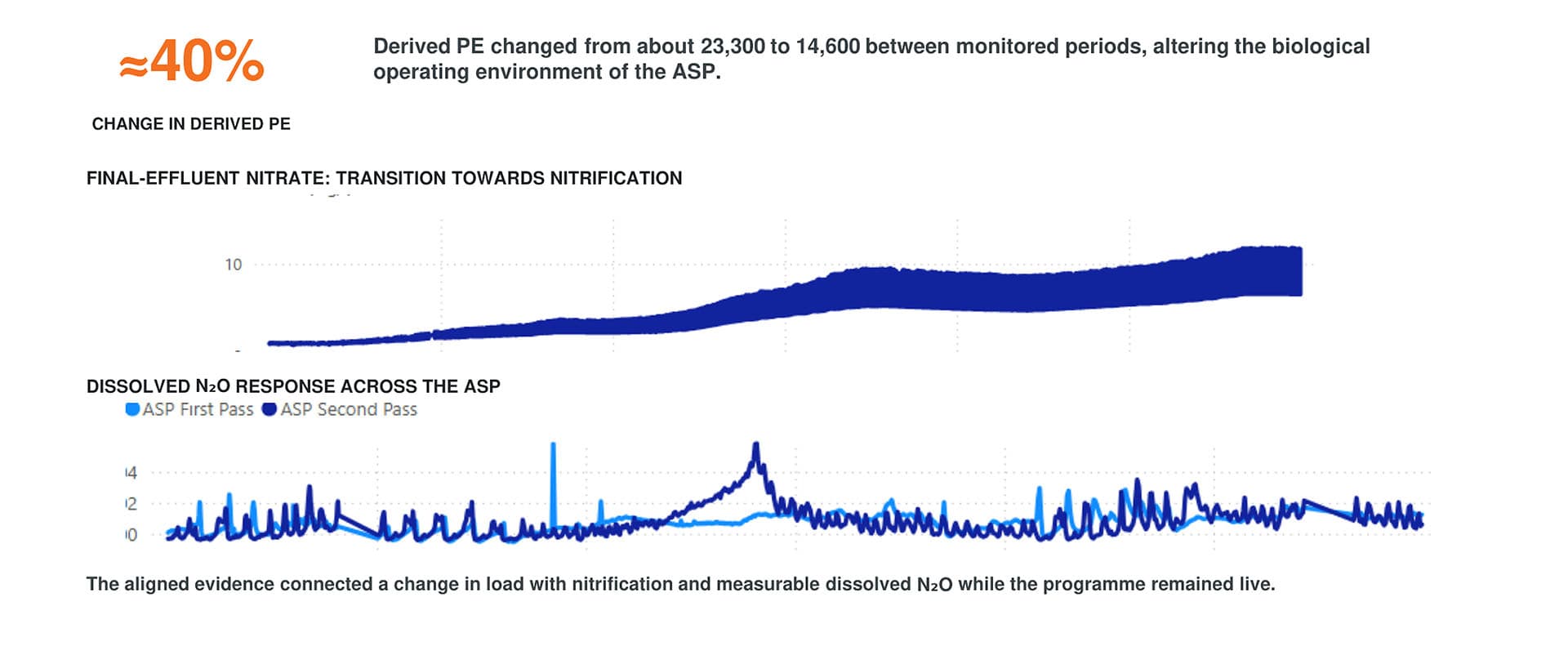
During higher loading, the monitored process behaved mainly as intended for carbon removal. At lower loading, final-effluent nitrate rose and dissolved N₂O became measurable.
Aligning load, aeration and nitrogen species showed that the emissions response followed a change in process behaviour rather than appearing as an isolated reading.
The evidence is shaping trials around available aeration volume, lane operation and control thresholds during lower-load periods.
Maintaining intended carbonaceous operation where appropriate, could avoid unnecessary oxygen demand while reducing exposure to n₂o generation, downstream denitrification, solids carryover and reduced uv transmissivity.